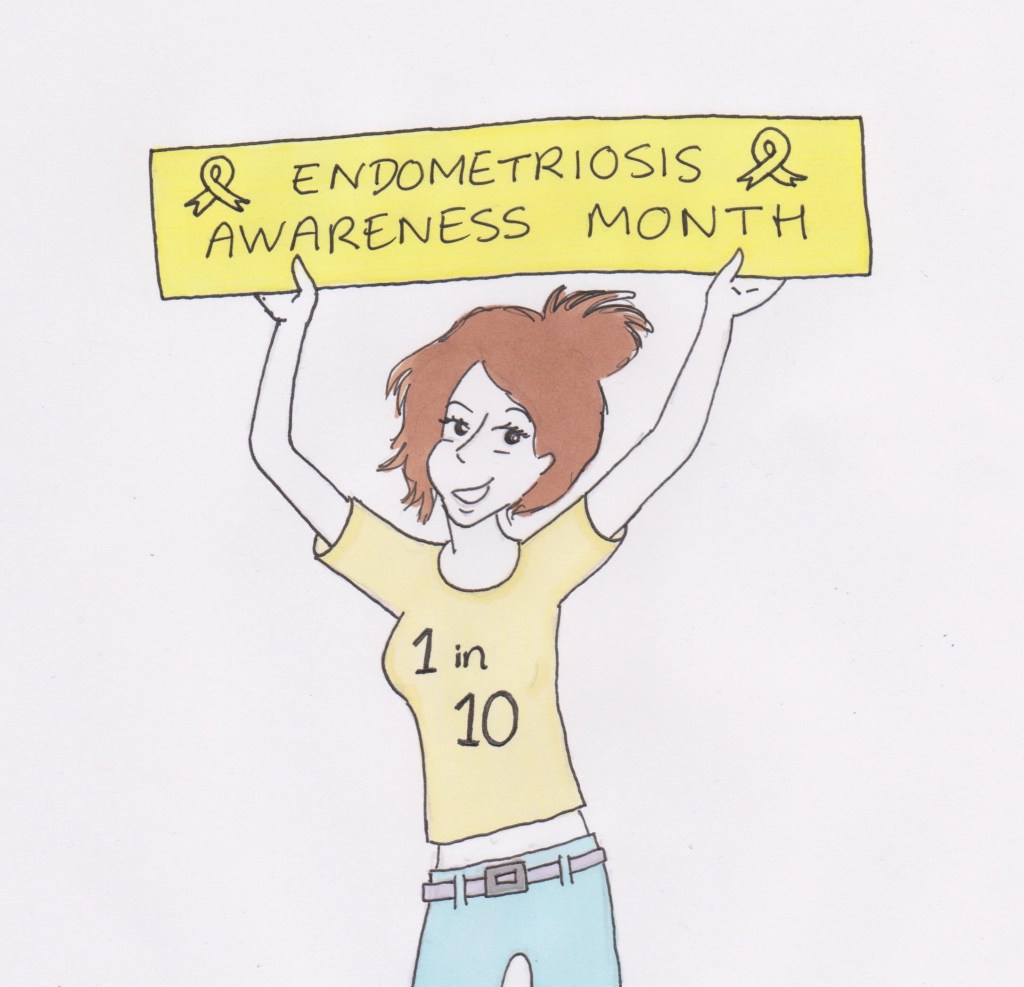
Despite 1 in 10 [1] women living with Endometriosis, awareness surrounding the condition is still very much limited – even within the medical community. As mentioned in previous posts, this results in some and/or many of the following:
- diagnosis delays
- prolonged bodily damage
- patient anxiety and frustrations
- and most worryingly, the wrong routes to treatment.
Throughout March – Endometriosis Awareness Month, these will be some discussion points I will be highlighting, as awareness is key to battling this disease. It still takes an average of 7-10years to reach an Endometriosis diagnosis [2]. Given the acceleration of technology, both in terms of the advancements in medical technology as well as increased information circulation, this timeline is shocking. Not only that, but many misconceptions such as Endometriosis being labelled as ‘a bad period’, can be very damaging to the rhetoric surrounding the condition, as this results in the spread of false and misinformation. Endometriosis is so much more than a bad period, it is a chronic condition – one of many which “… cannot be cured, only controlled, and are often life-long and limiting in terms of quality of life.”[3]
When I think back to my personal diagnosis timeline, there were so many clues to the fact I had Endometriosis, yet at the time I had never heard of it and many GPs I saw didn’t know much about it. This resulted in my diagnosis becoming a battleground, as without it my symptoms were frequently dismissed and denied by medical professionals.
The limitations surrounding Endometriosis knowledge goes back to the routes of menstrual shame and period taboos. Although recent years have seen these taboos somewhat lifting, menstrual silence is still prevalent throughout large components of society. As a result, misinformation surrounding periods and Endometriosis spreads like wildfire. Pregnancy is not a cure. Hysterectomies are not a cure. I have had doctors suggest these as possible routes towards a ‘solution’, yet this information is incorrect and not certified by Endometriosis specialists.
According to Endometriosis UK, 62% of women would put off going to a GP with Endometriosis symptoms. I include myself in this statistic, as despite returning with various symptoms across multiple appointments, my pain was continually dismissed.
Historically, women’s pain has been an accepted component of patriarchal culture and it is this ingrained prejudice which at times and in certain situations, acts as a barrier to Endometriosis care. Yet, as Audre Lorde states “we need to examine the ways in which our world can be truly different. I am speaking here of the necessity for reassessing the quality of all aspects of our lives and of our work, and of how we move towards and through them.”[4]
I will be thinking and echoing Lorde’s sentiment as the internet turns yellow in support of Endometriosis Awareness Month
[1] Endometriosis UK, https://endometriosis-uk.org/endometriosis-facts-and-figures
[2] @endohealthclub
[3] NHS Heath in Wales, http://www.wales.nhs.uk/healthtopics/conditions/chronicconditions
[4] Audre Lorde, Your Silence Will Not Protect You, Silver Press, 2017, p.25
[Image description: Camilla holds a yellow banner above her head reading ‘Endometriosis Awareness Month’. She wears a pale yellow T-shirt reading ‘1 in 10’, along with pale blue jeans and a lilac belt.]
 allaboutendo