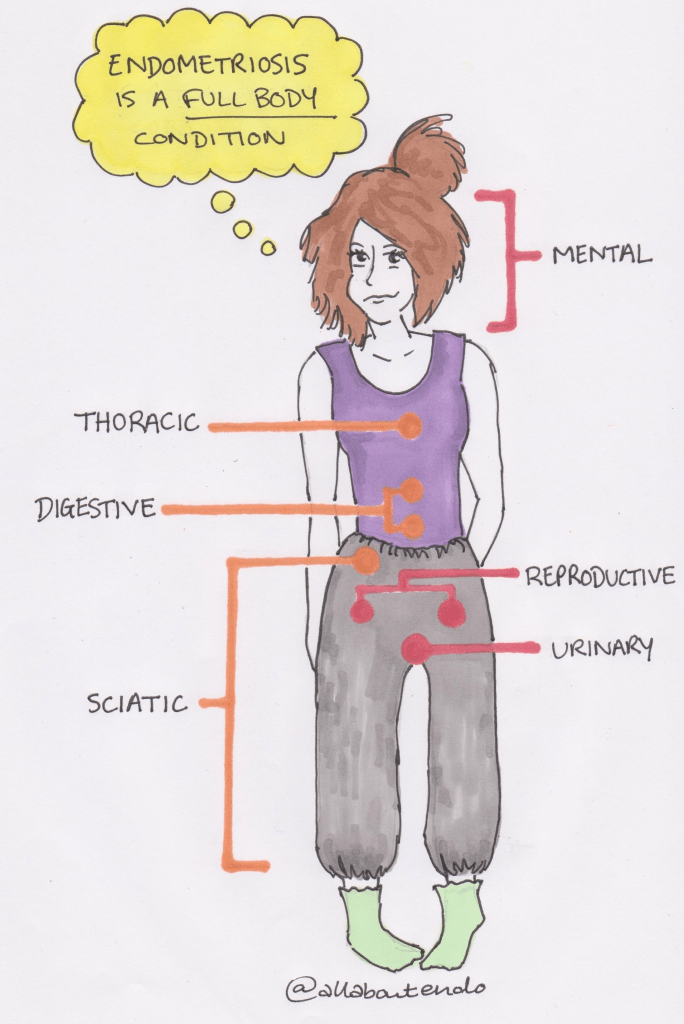
Endometriosis is mistakenly – and unfortunately often – referred to as a purely gynaecological condition, or ‘just a bad period’. This is far from true. Endometriosis is an inflammatory and systemic condition, meaning that its effects can be felt throughout the entire body. Side effects can encompass urinary and reproductive complications, sciatic and nerve issues, thoracic and digestive problems, as well as mental side effects such as brain fog and depression. This is something that I wish had been emphasised further when I was first diagnosed, as being informed on the possible side effects of a chronic condition is vital to finding suitable care pathways.
Endometriosis is a chronic condition where cells similar to the ones in the lining of the womb (uterus) are found elsewhere in the body. This is not limited to the pelvic area as is often the assumption. Instead, Endometriosis tissue has been found throughout the body and within various organs including, but not limited to:
- ovaries
- walls of the uterus
- fallopian tubes
- pouch of douglas
- bladder
- lungs
Symptoms often worsen during menstruation as these cells break down and bleed in the same way as those in the lining of the womb. Yet unlike the cells in the womb which are able to leave the body, this blood has nowhere to go and therefore builds up to cause inflammation, internal damage and scarring.
This can result in debilitating pain for Endometriosis patients, also causing various side effects such as chronic fatigue, infertility, pelvic pain, dietary issues and bowel problems. Each Endometriosis patient experiences symptoms differently – some will have a few of these whereas others will have more combinations.
Misinformation and misunderstanding of Endometriosis is widespread, even (in some cases) throughout the medical community. As a result it leads to some women living for years without a diagnosis, believing that their pain is just something they have to live with and endure. Taboos surrounding menstruation contribute to this issue. Given that menstrual health is not as widely discussed as it should be; abnormalities are often overlooked and blamed on the fact ‘it’s just a bad period’. Yet more preventative treatment and earlier diagnosis is vital, as this can limit the damage caused by Endometriosis. Not only that, but heightened awareness of the condition and possible side effects would also enable those living with Endometriosis to be better informed and prepared for the impact this condition will have on their lives.
[Image description: Camilla is stood in a purple strappy top, grey tracksuit bottoms and pale green socks. Both arms are by her side, with hands behind her back and brown hair which is tied up in a messy bun. Her body is labelled in areas to highlight regions affected by Endometriosis which include: thoracic, digestive, sciatic, mental, reproductive and urinary. A yellow thought bubble emerges from her head with the phrase ‘Endometriosis is a full body condition’. ]
 allaboutendo